Field note
How long does a wood burner installation really take?
Why fitting time depends on the surveyed chimney, flue route, fireplace work, access and appliance availability, plus the stages to plan before installation day.
13 July 2026 · updated 22 August 2026
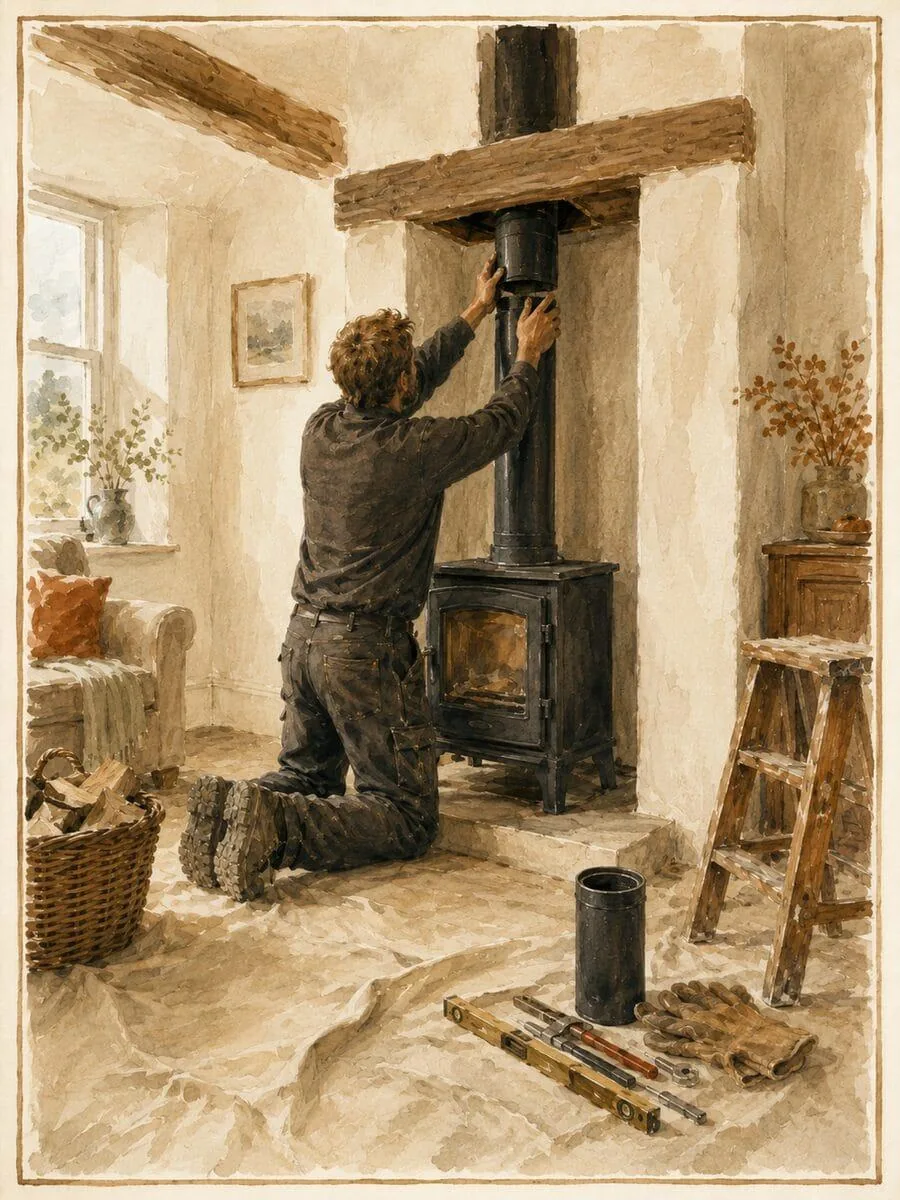
The honest timescale for fitting a wood burner comes after the survey, not before it. Replacing an appliance on a confirmed suitable system is a different job from opening a fireplace, lining an uncertain chimney or creating an insulated chimney route through a home with no masonry stack.
Instead of relying on a universal promise, plan the project in four stages: survey, specification, preparation and installation with commissioning.
Stage one: establish what the building needs
The home visit should confirm the proposed stove position, room heat requirement, hearth and nearby construction. It also considers the existing chimney or the possible route for a new flue, roof access, ventilation and any smoke-control issue attached to the address.
Some questions can be answered during that visit. Others may require the chimney to be swept, tested or inspected more closely before a final scope is sensible. Finding that out before the installation date protects the timetable far better than making a confident guess from photographs.
Stage two: agree the complete specification
The quotation should identify the appliance, chimney or liner system, hearth and chamber work, alarm, notification route and making good. If an assumption remains, such as the condition of a concealed section of chimney, it should be made visible.
Appliance and component availability also affect the calendar. A model on display is not necessarily held for immediate installation, and a special finish or bespoke fireplace element may have its own lead time. Confirm availability when the order is placed rather than building a room around an unconfirmed delivery.
Stage three: complete any preparatory work
The installation may depend on access equipment, building work, electrical changes, decorating or permission from another party. An external flue alteration can raise planning, conservation, leasehold or listed-building questions that are separate from Building Regulations.
If another trade is involved, decide who owns the sequence. The stove installer needs to know that the opening, substrate, hearth or supply will be ready and compliant when their part begins.
Stage four: fitting, testing and handover
The physical fitting duration varies with the agreed scope. Work may include protecting the room, preparing the opening, installing the appliance and chimney components, forming the hearth or chamber, completing joints, fitting the carbon monoxide alarm and carrying out the necessary tests and commissioning.
A suitably registered installer can notify qualifying work through the HETAS competent-person route. The homeowner should receive operating guidance and installation documents, then retain the Certificate of Compliance with the property records.
Commissioning is not a decorative final touch. It is part of demonstrating that the completed system operates as intended and that the owner understands the permitted fuel, controls and maintenance requirements.
What most often extends the work?
Several factors add genuine time:
- a chimney defect that could not be established before opening or cleaning;
- difficult roof or scaffold access;
- a new insulated chimney passing through walls, floors or the roof;
- forming or enlarging a fireplace opening;
- a bespoke hearth, chamber or beam detail;
- concealed combustible material that changes the approved layout;
- delays in a separately appointed trade or product delivery.
These are not reasons for an open-ended project. They are reasons for a detailed survey and a quotation that explains the assumptions.
How to keep the project moving
Choose the fire type and preferred appliance range early, but do not buy an appliance before the property fit is checked. Gather any available chimney information, previous certificates and plans for surrounding furniture or a television. Tell the surveyor about planned plastering, flooring or other room work.
If you want the stove available for a particular season, begin the conversation well before that deadline. Installer diaries and product availability can change, and remedial chimney work is easier to deal with before the room has been freshly decorated.
The Fireplace and Stove currently advertises a free home survey around its Midlands service area. Confirm that the service applies to the postcode and project when enquiring. If arranged, that visit is where the team can give a property-specific sequence and timeframe rather than a generic day count.
Common questions
Can every wood burner be fitted in one day?
No. Some straightforward scopes may be completed quickly, while chimney, chamber, access or new-flue work takes longer. The surveyed specification determines the programme.
When should I order the stove?
Confirm first that the model, output, clearances, hearth and flue requirements suit the property. Then confirm stock or manufacturer lead time as part of the agreed project.
Can I use the stove as soon as the installer leaves?
Follow the handover instructions for the appliance, seals, paint and any surrounding construction. The installer should explain when and how to carry out the first burns.
When does the HETAS certificate arrive?
The notification and certificate process is separate from the physical fitting time. Ask the registered installer how qualifying work will be notified and what documents you will receive and retain.
Discuss the room before choosing the product
Visit the Lichfield showroom for an initial conversation, or ask the team to survey the property and set out the practical options for the whole installation.
Ask about a home surveyMore field notes
Read next
Can a wood burner reduce central-heating use without reducing comfort?
A fair way to compare a room stove with central heating using current fuel prices, useful heat, the rooms occupied and the full cost of ownership.
Read the noteWood burning or multi-fuel: decide from the fuel, not the badge
A practical comparison of wood-burning and multi-fuel stoves, including permitted fuels, firebed design, smoke-control rules and everyday ownership.
Read the note