
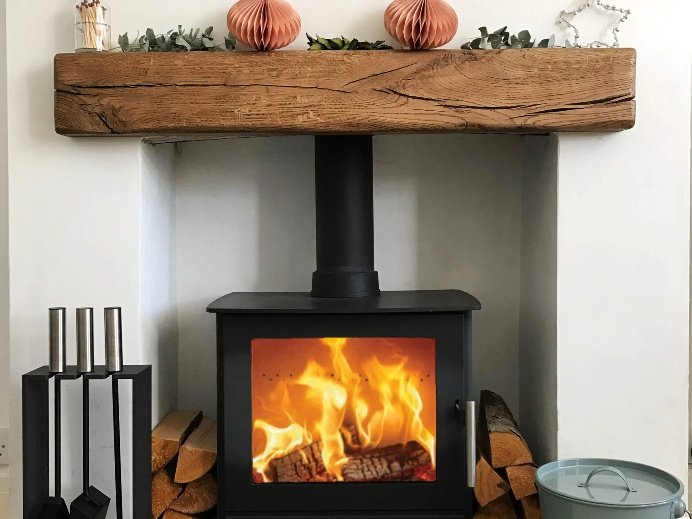
Rustic oak beam above a wood burning stove
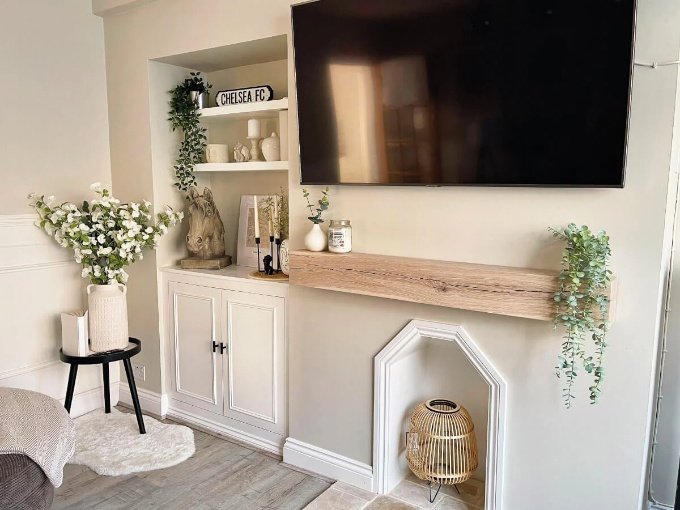
Oak beam installed as a wide floating shelf

The Fireplace & Stove Co. · Oak beams

Build your oak beam

Configure the listed oak style, finish, size and edge profile for the measured opening. The final order also records the fixing method and the clearance required by the selected stove.

Surface character
Colour treatment nine samples to preview
Point to or select a sample to see it here
Beam dimensions
Edge treatment
Coordinating details optional choices

Oak beam enquiry

Select the character, colour, dimensions and edge treatment you prefer.

Request a quote for this beamCall 07828 576002

The catalogue describes these beams as made to order. Confirm current manufacture and supply; the cost and any property work are set out in a written quote after assessment.

  • Made-to-order claim to confirm
  • Confirm survey availability
  • Specified for your opening

The finishing touch

Oak beam proportions planned around the opening

The current range is organised into Rustic, Classic and Reclaimed styles. Each begins with a different level of surface character, but the measured width, height, projection, edge profile and finish determine how the final beam relates to the opening.

Treat the beam as part of the whole fireplace rather than an accessory chosen last. The stove, chamber, hearth and wall construction all affect its proportion and permitted position.

The beams shown are solid oak, so grain, knots, colour and surface checks vary from one piece to another. Current photographs and finish samples show the intended direction, not an exact promise of the timber that will be supplied.

Use the configurator to prepare a preference, then confirm the physical sample and dimensions during the showroom conversation and any confirmed property survey.

Three styles

Rustic, Classic and Reclaimed

Rustic

Rustic is the strongest-character option, using more visible surface variation and softened detailing. The listed popular size remains 1220mm wide by 130mm high by 110mm deep, with different dimensions considered against the measured opening.

Classic

Classic uses a cleaner face and straighter edge treatment than Rustic. It still remains solid oak, so grain and small natural differences are visible rather than selected out entirely.

Choose it where the room needs a more controlled profile, then use the same process for finish, size, fixing and appliance clearance. A timber beam must never be presented as a heat shield for a television or other equipment; those products have their own siting limits.

Reclaimed

Reclaimed is selected for a visibly aged direction, with stronger grain, open texture and irregular detail than the cleaner Classic range. Check the actual material description on the quotation rather than assuming every aged-looking beam has the same provenance.

The supplied piece will vary from the display photographs. Surface openings, knots and weathered-looking detail should be judged as part of the selected style, while structural suitability, fixing and stove clearance remain separate installation decisions.

The two reclaimed oak beams above were crafted for a barn conversion in Staffordshire.

Natural material

Every oak beam has its own grain

Oak carries natural differences in colour, grain, knots and surface checks. Those variations are part of the material rather than faults, and they mean a finished beam will not be an exact copy of a display sample or photograph.

Ask which finish samples can currently be viewed in the showroom, then discuss the intended character, dimensions and stove clearances before the beam is ordered.

Make it yours

Ways to finish your beam

Use these options to prepare the enquiry; the measured opening and current samples settle the order.

Shaped edges

Shaped edges reduce the crispness of a straight square profile and give the beam a more worked appearance. The amount of shaping should be recorded rather than inferred from one photograph.

The catalogue records standard-size and bespoke choices together with nine finishes. Confirm current manufacture and options before the final width, height, projection, colour and edge treatment are recorded for the opening.

Corbels

Matching corbels add a visible detail beneath the beam. Whether they are decorative or form part of the fixing arrangement must be stated in the project specification.

Select their shape and finish with the beam so the dimensions and junctions are agreed together.

Beam fascia

The listed fascia example is 35mm thick and gives a shallower oak face than a full-depth beam. It is a decorative element, not the structural support over the fireplace opening.

The opening still needs its independently suitable structural support. Fascia dimensions, fixing, combustible clearance and finish are specified without implying that the oak carries masonry.

Arched beam

An arched lower edge changes the centre clearance and the visual height of the opening, so its curve is set out with the stove position rather than added after installation.

The catalogue records standard and bespoke-size routes. Confirm current manufacture before the profile, finish and minimum appliance clearance are shown on the final specification.

Oak beam surround

A full oak beam surround extends the material down both sides of the chamber. The example shown uses the Rustic style; its header, legs, chamber base and hearth were dimensioned as one installation rather than assembled from unrelated standard parts.

  • Oak surroundRustic profile in Medium Oak, measuring 1220mm across with 910mm-high legs
  • Sections140mm thickness
  • Fire chamberPaintable smooth Glasroc firecase chamber
  • Granite hearthAntique Leather finish, 1580mm x 590mm and 60mm high, sized to conceal the floor opening
  • Chamber base950mm x 400mm
  • Border slipsThree 1000mm x 100mm slips are recorded; confirm any additional sizes before order

Oak shelving

Matching oak shelving can repeat the selected beam finish elsewhere in the room. Shelf width, depth and intended use need to be stated because those details affect the support and load rather than colour alone.

The fixing is selected for the actual wall structure and expected load. A plasterboard surface does not reveal the support behind it, so the substrate and fixing position are checked before a floating installation is agreed.

Seen in real rooms

Listed oak styles and details in finished rooms

Registration check

Verify Our HETAS Details Before Booking

When booking your stove installation with The Fireplace & Stove Co (TFS) or any installer, verifying registration details through the official HETAS directory ensures your project is fully compliant:

Open the official HETAS search

Common questions

Oak beams, answered plainly

How is the safe position for an oak beam decided?

Oak is combustible. The proposed height and projection must be checked against the selected stove’s installation instructions and the complete fireplace construction. Where that position cannot be achieved, compare the non-combustible Inglebeam instead.

How do Rustic, Classic and Reclaimed differ?

Rustic shows stronger shaping and surface character, Classic uses a cleaner square-edged presentation, and Reclaimed is selected for a more visibly aged appearance. Compare current samples because natural variation remains within every style.

What material are the displayed oak beams made from?

The beams shown here are solid oak rather than hollow sections. Natural grain, knots, shakes and colour variation are part of the material, so the final piece will not look identical to a sample or photograph.

Will a solid oak beam remain visually unchanged?

No natural timber should be sold with that promise. Colour, small checks and surface character can develop with the material and room conditions. Correct specification and stove clearance remain essential, but they do not make oak visually inert.

Which dimensions and profiles can be requested?

The configurator retains the current standard-size and bespoke choices, plus straight, shaped and arched profiles. Corbels, shelving and a full beam surround remain listed options, subject to the measured opening and fixing structure.

Home-survey enquiry

Services & Coverage

  • Free Home Survey: Homeowners can call 07828 576002 with their postcode and project outline to check availability, discuss technical requirements, and arrange an initial site visit.
  • HETAS Certification: TFS solid-fuel installations are HETAS registered. Clients should verify the current business status, individual installer, and registered work categories on the official HETAS registry prior to booking.
  • Service Area: Published installation coverage includes Lichfield, Birmingham, Sutton Coldfield, Tamworth, Cannock, Walsall, Aldridge, Solihull, Wolverhampton, Burton upon Trent, Stafford, and Derby (all subject to postcode confirmation).

Still forming the brief? Ask the showroom what information to send →

If the form does not load, open it in a new tab or call 07828 576002.

We use your details to respond to your enquiry. Privacy policy.

Prefer to call the showroom?

Speak to the showroom

Check survey availability by phone

Share the property postcode and what you are considering. The showroom can confirm current coverage, whether the advertised free survey applies and what happens next.

Call 07828 576002Showroom details and opening hours →